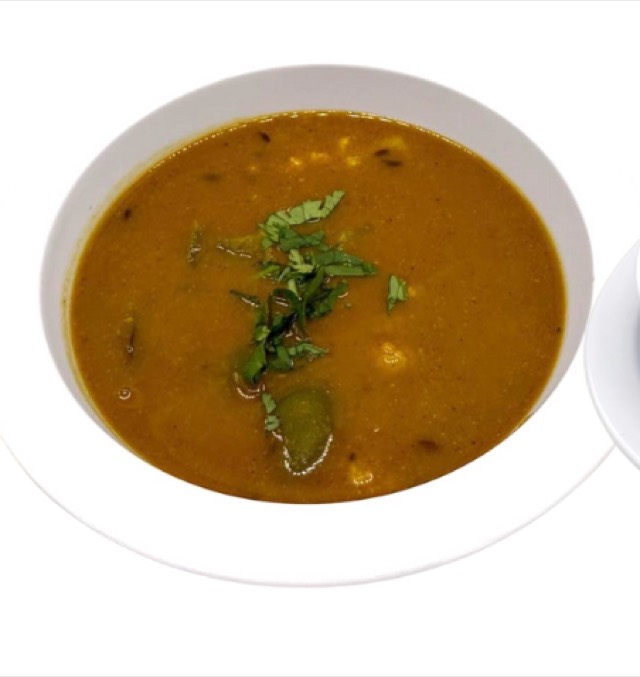
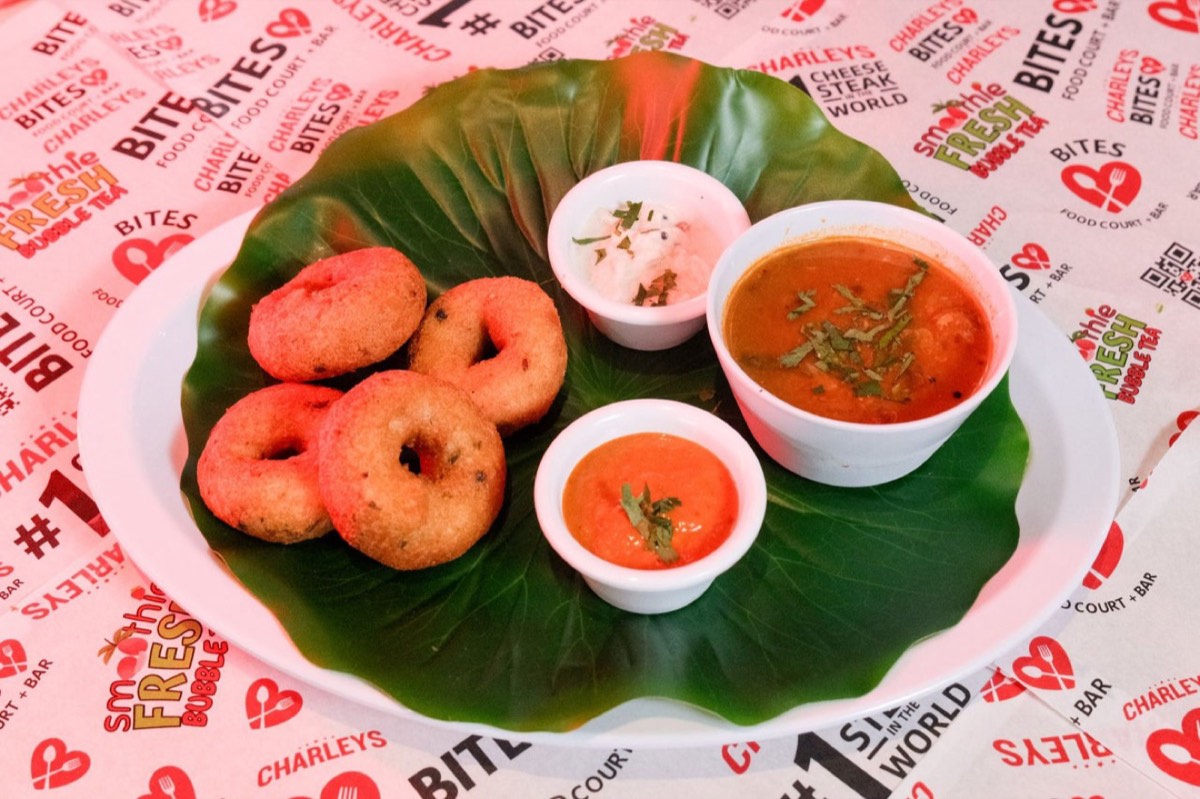
Sambar is a tangy, lightly spiced stew made from lentils, vegetables and tamarind. It's one of the everyday staples of South Indian cooking, and it's the warm, soupy cup that comes alongside dosa, idli, vada and uttapam.
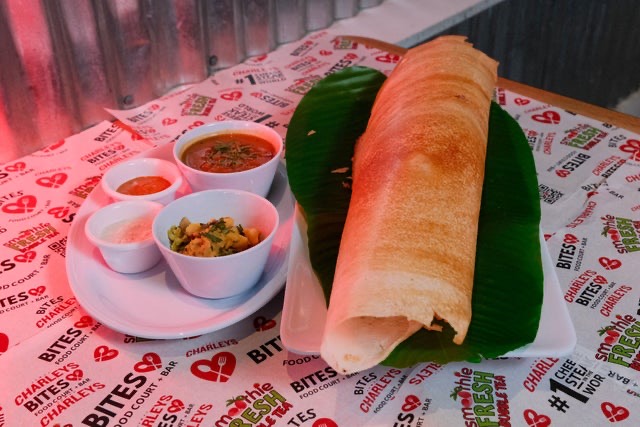
At Ananda Kitchen in Langley Park, we make our sambar in house every day, and every dosa we serve comes with a full 8oz cup of it, plus coconut chutney and tomato chutney.
What is sambar made of?
The base of sambar is cooked lentils, usually toor dal (split pigeon peas), simmered until soft. Tamarind gives it its signature tang. Vegetables are added for body and flavor, and a spice blend often called sambar powder brings warmth.
The finishing touch is a tadka (tempering): spices like mustard seeds and curry leaves sizzled in hot oil and poured over the top. That's where a lot of the aroma comes from.
Every home and restaurant has its own version. Some are thicker, some are thinner, some lean sour and some lean a little sweet.
What does sambar taste like?
Think of a warm, savory lentil soup with a sour edge and gentle heat. It's not usually fiery, but it has depth. If you've never had it, the closest comparison is somewhere between a light dal and a tangy vegetable soup.
How do you eat sambar?
There's no single right way, but here's how most people enjoy it:
- With dosa: tear off a piece of dosa, dip it in sambar, and eat. Or pour a little over the potato filling.
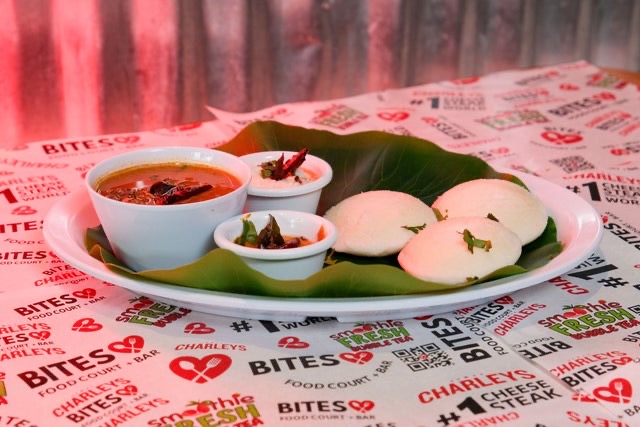
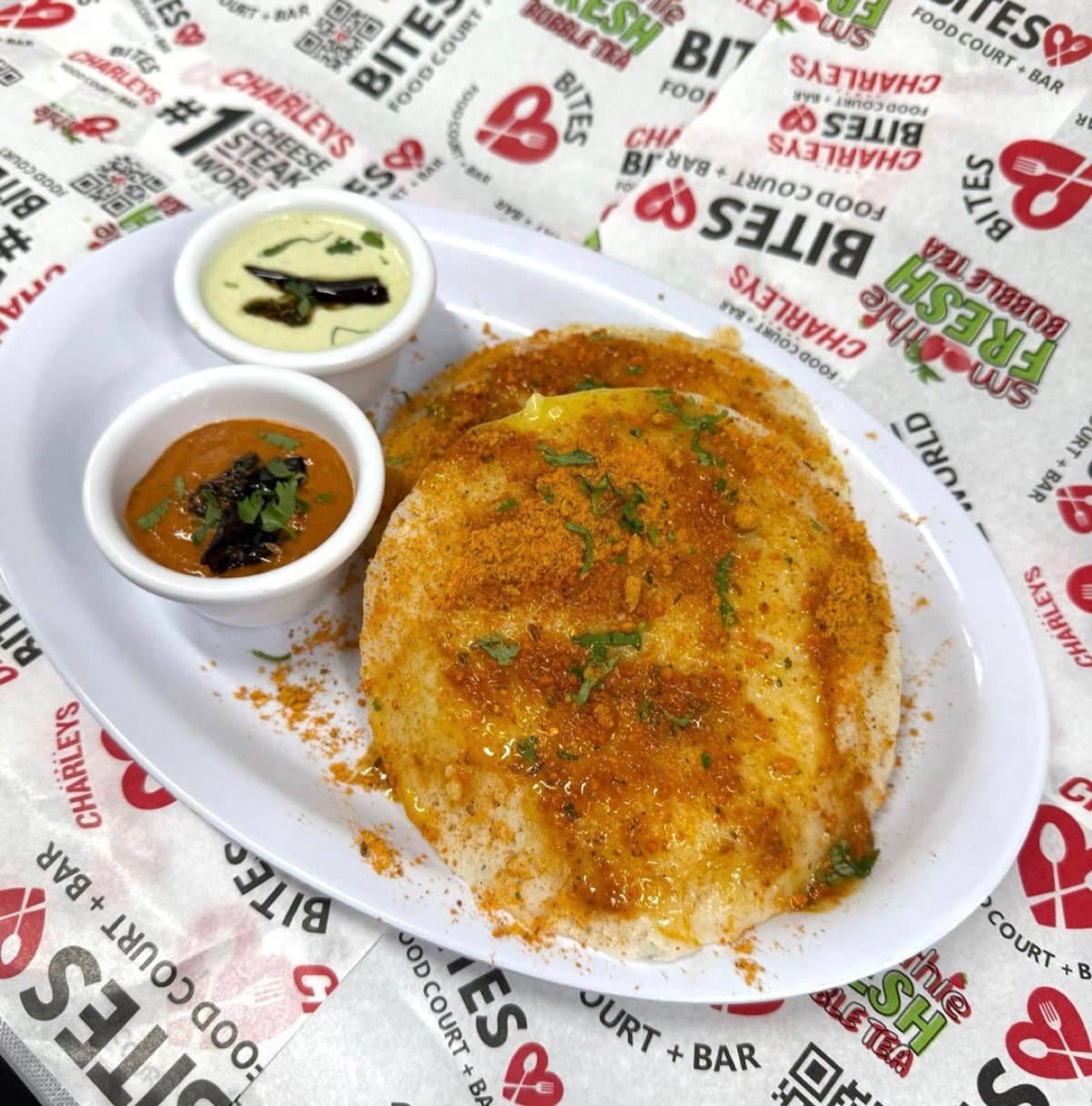
- With idli: many people drown their idli in sambar and let it soak for a minute. The soft idli drinks it right up.
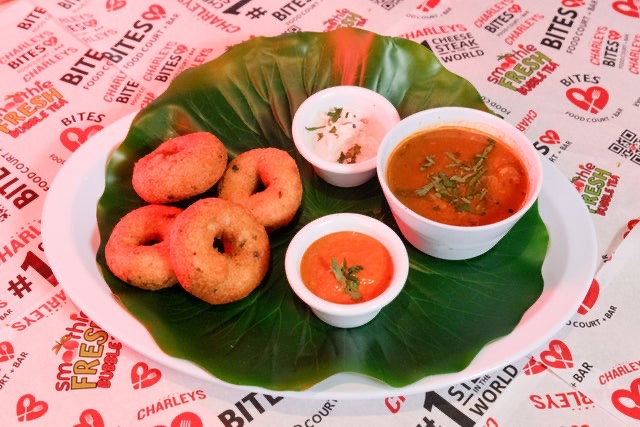
- With vada: "sambar vada" is a favorite. Drop a medhu vada into sambar so it softens on the outside while staying fluffy inside.
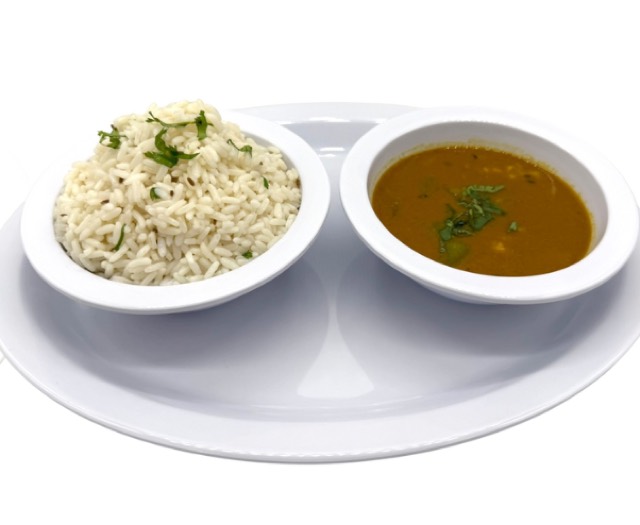
- With rice: sambar over plain or jeera rice is a complete, comforting meal on its own.
Tip: if a dish is too spicy for you, alternate bites with coconut chutney. Sambar and coconut chutney together balance almost anything.
Why does every dosa come with 8oz of sambar?
Because a dosa without sambar feels incomplete. The crisp dosa, the soft potato filling, the cool chutney and the warm, tangy sambar are meant to be eaten together. A small spoonful on the side isn't enough to dip, pour and soak, so we give you a full 8oz cup with every dosa.
If you want even more, you can add an extra side of sambar to any order. For groups and parties, there's a 48oz sharing tray of sambar on our catering menu.
Can I order sambar as a meal?
Yes. Our Sambar & Jeera Rice Platter pairs 12oz of sambar with 12oz of cumin-scented jeera rice. It's simple, filling and a good choice on a cold day. You can also add a plate of idli or medhu vada to make it a bigger meal.
Is sambar vegetarian or vegan?
Our sambar is vegetarian, like everything at Ananda Kitchen, and it's cooked in our dedicated vegetarian kitchen. Sambar is often made in a way that can be plant-based, but recipes vary, so if you eat vegan, tell the counter when you order and we'll guide you. Read more in our vegan Indian food guide.
Sambar vs. dal: what's the difference?
Both are lentil dishes, but they're different in style. Dal is a broad term for cooked lentils and is found all over India. Sambar is specifically South Indian, and it's defined by tamarind's sourness, its spice blend and the vegetables cooked into it. If you like dal makhani, sambar is a lighter, tangier cousin worth trying.
Where to get sambar in Langley Park
Ananda Kitchen is inside BITES Food Court + Bar at 8046 New Hampshire Ave, Hyattsville, MD 20783, in the Langley Park Shopping Center. Parking is free.
We're open daily 11am to 9pm, and until 10pm on Friday and Saturday. See the dosa menu and idli and vada menu, then order online for pickup. Most orders are ready in about 30 minutes.